
What Carbon County Property Tax Records Separate
Carbon County splits its property tax records across two offices. The Assessor keeps the valuation file. That office estimates fair market value for tax purposes through sales, income, and cost approaches. The Treasurer then applies the tax district. It also tracks the tax bill, delinquency, and any sale activity on the account. An owner should read those values and the bill as connected but distinct property records. Each answers a different question about the parcel.
| Field | What It Shows | Where |
|---|---|---|
| Assessed value | Value the Assessor uses in the tax process. | Assessor roll. |
| Market value | Assessor's fair-market estimate informed by sales, income, and cost. | Assessor valuation. |
| Exemption status | Relief status, if one applies; confirm rules with the county. | Assessor or Treasurer. |
| Tax bill and status | Charges, paid or delinquent status, and balance details. | Treasurer account. |
| District | Tax district associated with the parcel. | Treasurer account. |
A tax bill reflects the tax roll, not the market. The assessor's valuation is an appraisal for taxation. It is not a prediction of what a buyer would pay. Keep each figure in its own column. Note the assessed value, the tax bill, and any deed consideration shown in the property records. Mixing them leads to bad comparisons of a parcel.
Finding a Carbon County Tax Bill by Parcel
The county's real-property payment service runs on a ten-digit parcel number. If you do not have the parcel number, start with a property search. Use the public property results page for that step. Carry that number to the Treasurer's payment page and verify the parcel before paying. Carbon County also posts a delinquent-properties table with a search field and a detail button. Each row lists the parcel, owner of record, delinquent year, principal, penalty, interest, and district. That listing helps identify an account. The Treasurer confirms the exact payoff and current status, though.
- Find the full parcel number in the property record or tax notice.
- Enter that number in the real-property tax service and confirm the parcel identity.
- Review the bill year, tax district, payment status, and any listed delinquency.
- Contact the Treasurer for an authoritative payoff or auction status.
- Assessed value
- The valuation figure used in the tax process.
- Tax district
- The district attached to a parcel for the Treasurer's account.
- Delinquent year
- The year of unpaid tax shown in the county's delinquent list.
- Tax sale
- A county sale process for property in the fifth year of delinquency.
Carbon County Assessment Appeals Use a Notice Calendar
Valuation notices go out from the Assessor in July. Carbon County gives owners until September 15 to appeal, or 45 days from the mailing date, whichever comes later. Appeals go to the Board of Equalization. Rely on the date printed on the notice, and confirm current procedure and delivery method with the Assessor. A disputed appraisal belongs in that assessment process. Paying a bill, or reading the delinquent listing, never changes the valuation on the tax roll.
Appeal window. The county publishes September 15 or 45 days from the mailed notice, whichever is later, as the filing deadline. Keep the notice and evidence of value, and verify the current Board of Equalization instructions with the Assessor.
Carbon County Property Tax Records Begin with Market Value
The Assessor evaluates fair market value for taxation. It weighs sales, income, and cost approaches. Those are valuation methods, not three prices you can pick from. Location, land, improvements, and comparable sales all shape the estimate. Something look wrong on the roll? Raise it with the Assessor. Cite the parcel number and any supporting documents. The Carbon County Assessor page explains its valuation role and appeal route.
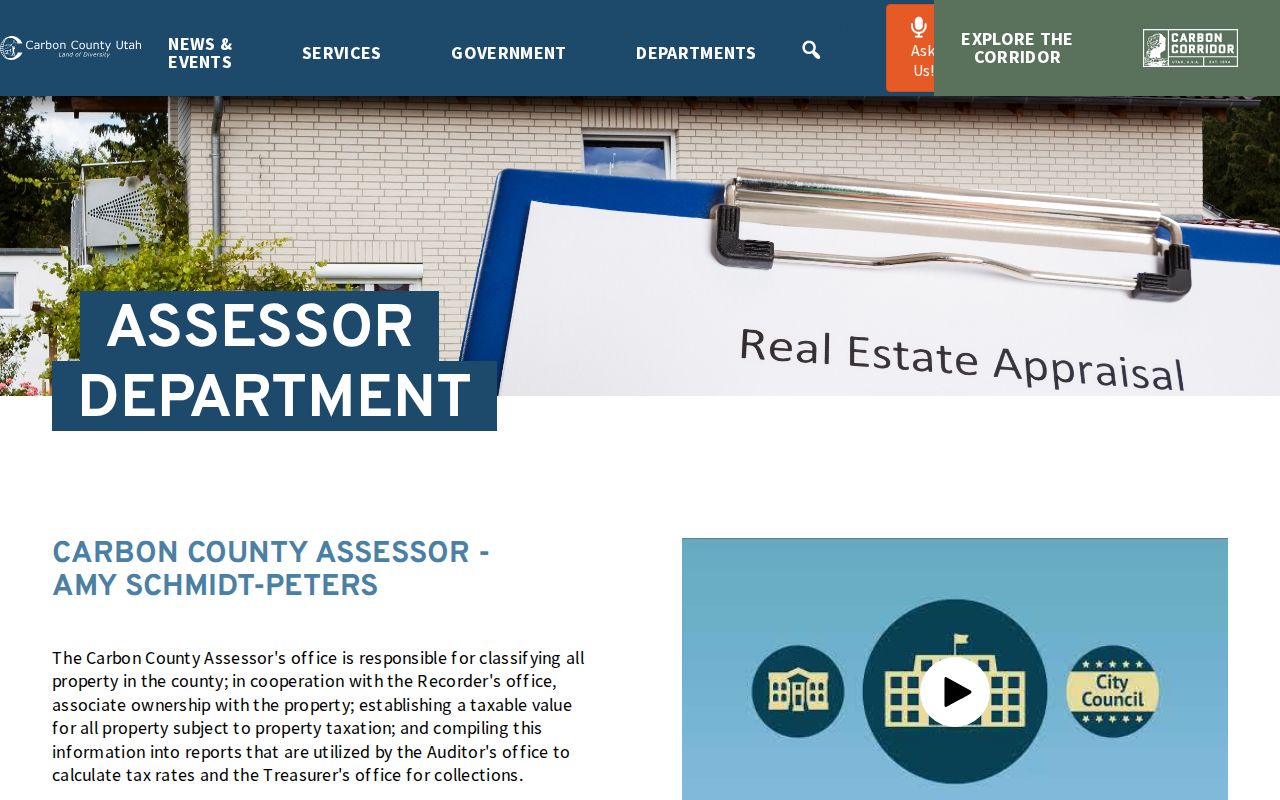
Every tax bill in Carbon County starts with an assessment. That figure is a market estimate built for taxation, nothing more.
It is not a private appraisal. It is not a promised sale price for the parcel either.
Carbon County Sends Valuation Notices in July
The county's appeal information anchors the yearly challenge window to a July valuation notice. Keep the mailed notice. Its date controls the 45-day alternative to the September 15 deadline. The Assessor says the later of the two dates governs. Before filing, check the current Board of Equalization directions. Also gather evidence tied to the value date, property condition, or comparable sales. Never send an appeal to the Treasurer. That office only handles the bill and collection.
Questions about a wrong parcel characteristic or record data also go to the Assessor. A data correction and a formal value appeal are related tasks. But a call about the roll will not by itself preserve the deadline.
Carbon County Property Tax Bills Come Due November 30
The county Treasurer lists November 30 as the real-property tax due date. Check the specific account and year before paying. Do this especially if the tax notice and online result disagree. The delinquent-property page offers a Search field and detail control. Its sample rows separate principal, penalty, interest, year, and district. A delinquent balance can change at any time. Ask the Treasurer for a current payoff instead of adding up an older screenshot.
Utah sets the applicable interest rule. The county account shows how charges hit that parcel. The Treasurer's published material describes a penalty window and interest. Verify the current percentages and dates on the live county page before calculating a balance yourself.
Carbon County Online Tax Payment Uses a Ten-Digit Parcel
The online real-property payment route requires a ten-digit parcel number. A county search example may display a hyphenated APN. Follow the format the payment screen requests. Confirm the parcel description before submitting funds. Mail, drop box, in-person, and online options are all listed by the county. Mailed or drop-box payments carry no return receipt. When timeliness matters, keep a copy of the tax notice and payment record. The county's real-property tax payment page shows the parcel requirement.
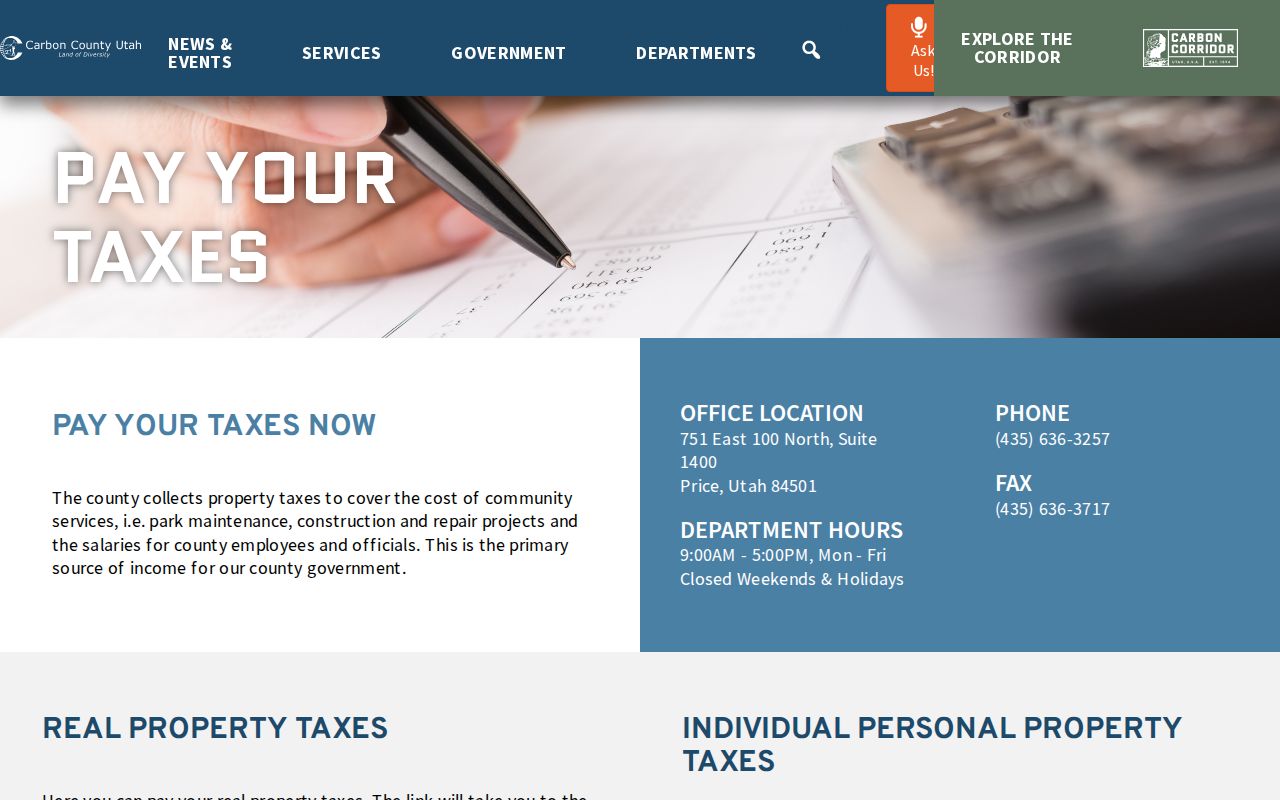
Published payment information lists a 2.5 percent processing charge on card payments, with a $2.50 minimum.
Carbon County Tax Sale Follows the Fifth Delinquent Year
Carbon County moves a parcel into tax-sale territory in its fifth year of delinquency. The auction itself typically lands in mid-May. A delinquent row on the public list is a status flag. It is not a title statement. The Treasurer's own materials stress buyer beware. The warning is blunt: a tax deed does not guarantee clear title. Before relying on an auction entry as ownership history, pull the recorded deed for the parcel. Get independent title advice too. A delinquent tax record tells you what is owed, not what you would own.
The county's delinquent property search shows the sample columns the delinquent list uses.
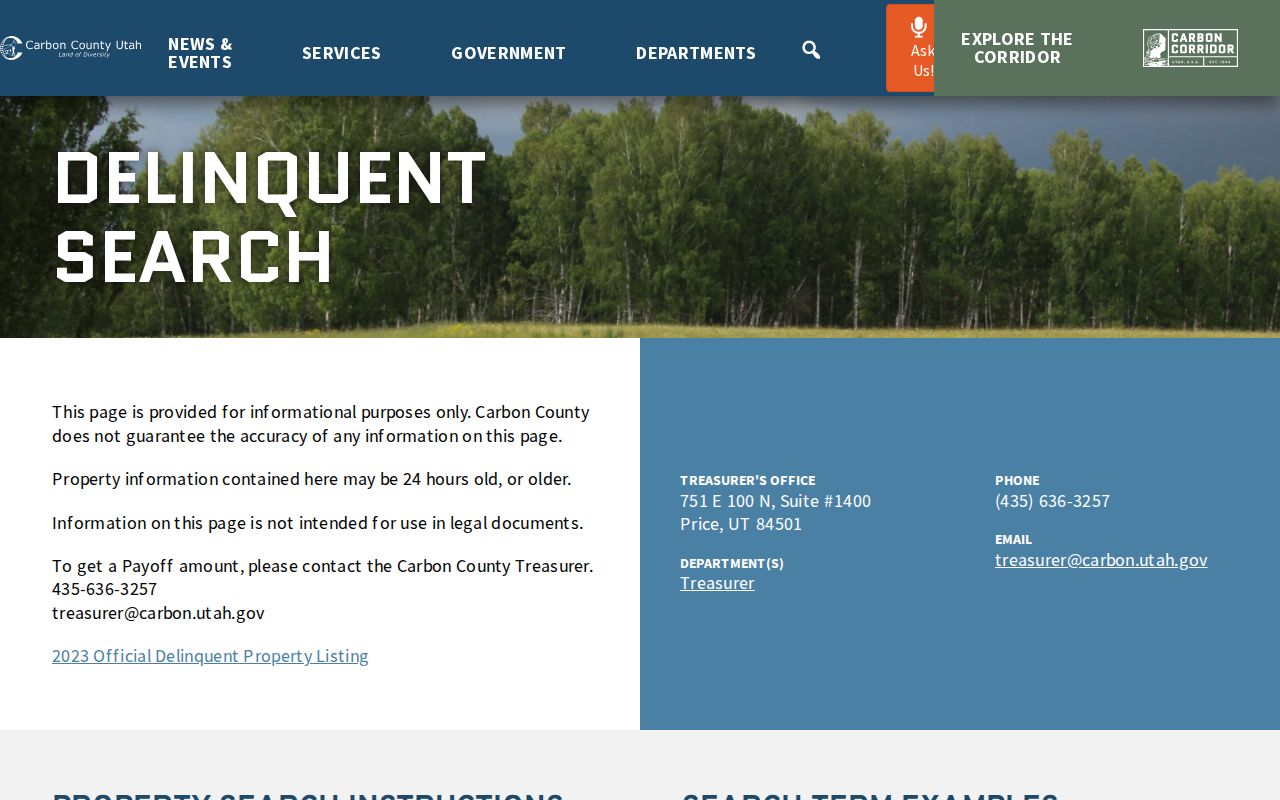
For an exact balance, the Treasurer's office is the custodian of record. For the legal effect of a sale, obtain the recorded instrument and order an independent title review before acting.
Carbon County Tax Relief Has Its Own Eligibility Rules
Carbon County does run property-tax relief programs. But a parcel record cannot tell you whether someone qualifies. Eligibility belongs with the Treasurer or Assessor. A tax notice rarely spells out every relief option. And it will not show whether a filing is current. Ask directly which program fits the property and what documentation it needs. The owner of record, assessed amount, and district on the property record identify the account. Yet they settle nothing about qualification.
Keep relief questions separate from value disputes. An exemption, if approved, changes how the property is taxed. An appeal challenges the valuation itself. The Assessor and the Treasurer can route each request to its correct form and deadline.
Carbon County Delinquent Rows Explain Each Charge
A delinquent listing in Carbon County carries more detail than a plain past-due flag. The parcel number and owner of record tie each row to the property. The year shows the delinquent period. Principal, penalty, and interest break the amount into its parts. The district places the bill among its taxing authorities. Check those fields against the current Treasurer account rather than treating the public list as a payment quote. The county cautions that its public data may lag. A mailed notice may show different numbers than the website. In that case, call the Treasurer with the parcel and tax year in hand. That office can confirm the official balance and the payment status. It can also say whether the parcel sits on a sale schedule.